STOP THE DOPE!!!
Monday, October 22, 2012
Monday, October 8, 2012
POETRY IN THE AGE OF MEH
Poetry, as Lewis Carroll might have said,
is a curious thing.
It is written by few, published
by ever fewer, and read by precious few.
Yet, when a leader needs to make an
important speech, on some occasion of great civic importance, they will
invariably reach for quotes from poems. Or their speechwriters will.
Poetry has its abiding power, even in an
age when almost no-one reads it.
Why? We don’t know. The reason is partly
because we don’t know what poetry is. It defies definition, science. It
has even survived centuries of academic inquiry, almost intact.
The poet Robert Graves gave us some insight, by stating that “poetry is inspiration, tempered by common sense”.
He also touched upon the advice that
parents invariably give would-be poet children, that they should get into real estate
instead, by remarking: “It’s true that there’s no money in poetry. But then,
there’s no poetry in money.”
Despite the fact that poetry has become
definitively what marketeers call “niche”, it refuses to die out. It has flourishes – new readings spring up, there are slams and festivals…
and the literary page of the paper might fasten onto it with an occasional “poetry revival”
yarn, but in the end we all know the truth: Poetry is for
devotees, dilettantes, and nuts.
As the late Carol Novack put it: “No-one cares about poets, except other poets, and their mothers god
bless them.”
All of which makes the arrival of any new
collection of poetry something to celebrate.
It’s like the arrival of a bonnie baby in a retirement village.
The writing, the editing, the publishing of
poetry, are all profound acts of faith in a world of cynicism, of anomie, of
blah, of meh.
That those acts take place on a regular basis, and new poetry books do appear, is nothing short of curious - and indeed, miraculous.
Remarks made launching Glass Bicycles, poems by Brendan Doyle,
Carrington Hotel Katoomba, 6 October 2012.
Monday, September 10, 2012
Tuesday, August 14, 2012
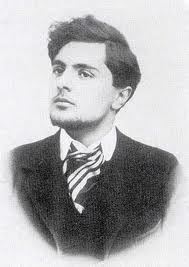
ALERT - WINDOWS! MODIGLIANI, HEBUTERNE, RIDING AND GRAVES

Modigliani painted some of the twentieth century’s most admired portraits and nudes, including his languorous dark-haired Reclining Nude (1917), and Sleeping Nude With Arms Open (Red Nude) (1917). He was born in Italy, and studied art in Florence and Venice before settling in Paris where, like most struggling artists, he lived in penury. He drank and took drugs, and over the years his health declined. After a series of wrenching love affairs, in early 1917 he was introduced to Jeanne Hebuterne, a fellow artist, and an artist’s model, and was instantly beguiled and smitten. She was equally taken, and they fell in love.
Her family did not approve of her becoming involved with a penniless artist, but there was little they could do. The couple moved to the south of France and lived in Nice, where their daughter Jeanne Modigliani was born in late 1918. From 1917-1919 Modigliani painted numerous elegant signature portraits of Jeanne Hebuterne, who became pregnant again. But Modigliani’s health was failing badly by then, and he contracted meningitis, and died in January 1920. Distraught, Jeanne Hebuterne was taken in by her parents, but the next day she threw herself from their fifth floor window.
The orphaned Jeanne Modigliani grew up knowing little of her parents’ fate until her adulthood, and ultimately published Modigliani: Man and Myth in 1958. She later passed on documents and previously unknown artworks by her mother to a French art critic on the proviso they not be made public until the year 2000, and in October of that year the paintings and drawings of Jeanne Hebuterne were exhibited for the first time.
Curiously, nine years after Hebuterne’s death, a similar incident took place in London, when American poet Laura Riding threw herself from an upper window after being rebuffed by a lover. Author T.E. Lawrence visited her in hospital, and wrote of it in a letter to his friend Charlotte Shaw, the wife of George Bernard Shaw. “She has broken her pelvis, and three bones in her spine, but will recover, they say, in six months. For love of an Irishman, Geoffrey Phibbs (who did not love her any more) she had thrown herself down four stories...”
The English poet Robert Graves comprised the third part of a triangle with Riding, and after she had thrown herself out, in despair he jumped too, from one storey down, but landed without serious harm.
He wrote his best-selling World War I memoir Goodbye to All That by Riding’s bedside as she recovered, and the pair departed England for the hilltop village of Deya, Mallorca, in Spain, where they lived together for the next ten years.
“Stop him,” Dallow cried: it wasn’t any good: he was at the edge, he was over: they couldn’t even hear a splash. It was as if he’d been withdrawn suddenly by a hand out of any existence - past or present, whipped away into zero - nothing.
- Grahame Greene, Brighton Rock
From my book Dead Famous: Deaths of the Famous and Famous Deaths.
Tuesday, July 10, 2012
DYLAN THOMAS: DEATH IN THE CHELSEA HOTEL
Although he is generally considered to have drunk himself to death, the popular Welsh poet is now believed by some experts to have died due to over-medication by a doctor. Thomas was in New York in November 1953 on a public reading tour, when after a night of heavy drinking, during which he boasted to have drunk 18 whiskies, he awoke feeling unwell in his room in the Chelsea Hotel.
He complained of shortness of breath as well as his chronic gastric and gout problems, and a doctor was called who gave him painkillers. Thomas was still in pain and experiencing delirium when the doctor was called back, and after the patient asked for something to make him sleep, he was administered with an injection of morphine.
Hospital records reveal the dosage to have been abnormally high, and hazardous given the difficulties Thomas was having with breathing. After the injection he drifted into a coma, from which he did not emerge, watched over in his hospital bed by his lover Elizabeth Reitell, and fellow poet John Berryman. He died a few days later, on 9 November, the official cause of death cited as pneumonia.
The 39 year old Thomas was one of the best known poets in the English-speaking world at the time, famed for the beauty of his imagery, and a heady lyricism acquired from the Welsh language in works such as his play for voices Under Milk Wood. He was also renowned for his poem “Do Not Go Gentle into That Good Night”, an angry rejection of mortality, written after the death of his father.
He was born in Swansea, and started writing during childhood. He entered journalism and moved to London where his collections of poems in the mid 1930s gained attention. He became a well-known voice on BBC radio during the 1940s, and continued publishing poems, with his Collected Poems appearing in 1952.
With his turbulent marriage to his wife Caitlin under pressure, to find income for them and their two children he started doing lecture tours of the east coast of the United States. He also contemplated the ephemeral riches of the movies in Hollywood, and like many authors watched his film plans turn to vapour in his fingers. The reading tours proved popular though, and he continued them for several years up to his death. He also came to appreciate the attentions of Elizabeth Reitell, who it was summoned the doctor to his bedside on 4 November 1953.
Despite his reputation as a successful poet, the items recovered from their room in the Chelsea Hotel, and rediscovered decades later in an old filing cabinet in Wales, reveal a life of struggle. Amid racing tips on scraps of paper, and bottles of antacids, was his publishing contract for Under Milk Wood, specifying an advance of 250 pounds, and the standard six free author copies, the document stipulating that any further copies could be purchased at “25 per cent less than the published price”.
His widow was later informed that his estate comprised the sum of eight pounds.
Although Thomas attended an early reading of Under Milk Wood, it was not produced until the year after his death. The atmospheric, comic-dramatic piece became his most famous single work, recorded with Richard Burton reading, and was later made into a feature film. Sadly, Dylan Thomas was not there to see his work on the big screen at last.
“Here's to alcohol, the cause of — and solution to — all life's problems.”
- Homer Simpson
From my book Dead Famous: Deaths of the Famous and Famous Deaths.
Sunday, June 17, 2012
LIFE, THE UNIVERSE, AND IN THE NIGHT GARDEN
Although the world’s major religions promise eternal life to those who faithfully
follow their various laws and taboos, no-one can comprehend what eternal life
would be like. This is because life’s finiteness, bounded irrevocably by death,
is a key defining characteristic of what we call the human condition. But as
regards the promises by religions of eternal life, all we know is that this
life is all we know, and beyond it – unless we take seriously the imagery of
floating on clouds playing harps, or an endless virgin orgy – we know nothing.
But what would we do forever, anyway? Go
fishing? Drink Moet? Fuck? Take ecstasy? Improve our putting? Tweet? Even those
delights would not seem adequate to fill all those aeons which would be,
truthfully, endless. Could we
stand it, if beyond death we had anything like the attention spans and boredom
thresholds we have in this life? “Millions long for immortality who don't know
what to do on a rainy Sunday afternoon,” quoth Unknown. The fact is we have no
possible conception of what it would be like to live forever.
In many respects, too, curiously enough, death is our friend. It is
ultimate release from all we have carried through life. For those whose lives
have been marked by desperate poverty, chronic illness or other suffering – and
that goes for a large proportion of the human population – death may be seen as
a saviour, even redemption.
It is a fact that our lives are painfully brief,
and will remain for the foreseeable future (notwithstanding advances in medical
science, and our inevitable physical melding with the machines of our own
creation). We have barely left the womb when they are burying us in a box. Threescore
and ten, and the rest is silence. It seems a pitifully short span, when all
around us is the manifest immensity of space, and stars that have been burning
for billions of our years. One is
tempted to say that a longer span of life could enrich us, and bring us deeper
wisdom as a race, but for the troubling thought that there is no fool like an
old fool.
But eternity? Could we stand eternity? After
all, could we live with others, for all time? As Sartre might have noted, that
would not be eternal Heaven, but Hell. Even worse than that, we would have to
live with ourselves forever, and how few of us enjoy spending time with that
particular individual too? Yet still we long for an afterlife, for eternal
life, deliverance from the grave, for Heaven, Valhalla, release from the karmic
wheel. So, for what, really, are we longing?
Parents with young children get a tiny,
nightly foretaste of what eternal life could be like, through a television show
called In The Night Garden. It is the
brainchild of a clever Englishman named Andrew Davenport, who also dreamed up
its renowned precursor, Tellytubbies.
The characters of In The Night Garden
- headed by a bright blue Gumby-like creature with a lop-sided grin called
Igglepiggle, a doll with a wild rainbow of hair and an inflatable skirt named
Upsy-Daisy, an OCD rock-collecting pre-tech head called Makka-Pakka, and the
trousers-losing cuddly trio the Tombliboos - inhabit a charming, twilit,
woodland domain. In each episode they wander around, sublimely happy, thinking
of nothing more taxing than whether it’s a “dancy day” or not. They snuggle, kiss,
chatter on in squeaks and squawks of even fewer than 140 characters, and
generally dream their time away. Even if something potentially untoward does
happen, and the green puffer zeppelin called the Pinky Ponk that they are flying
in strikes a tree, the worst thing that the kindly narrator Derek Jacobi ever utters
is “Isn’t that a funny Pinky Ponk, bumping into that tree!”, and ends the episode
with the trademark, “Isn’t that a pip!”
The characters of In The Night Garden appear to possess little or no memory, and thrive
in the bliss of an eternal present, puttering about their little patch of
woodland singing, dancing, collecting stones, and engaged in other eternally
repetitive acts. Memory, of course, is the enemy of eternal bliss, even eternal
sanity. Because if we have no recollection of what we did half an hour ago, or
even five minutes ago, every hour can be filled with discovery, forever
renewed, which we might happily go on with, well, forever. None of the characters can speak very much –
in fact most of them can hardly speak at all – which would place them under the
age of three average human years. Three is the age at which “individuation”, or
the sense of one’s self as separate from the world around, is usually thought
to occur, so that in the case of the show’s characters, there is a sense that
they remain linked to one another, and to their world, on a deep and abiding level.
The sense of complete immersion in something greater than one’s self is woven
deeply into the psyche of In The Night
Garden: the world it evokes is a virtual reality unto itself.
Curiously enough, we all lived the first few
years of our lives in much the same way that Igglepiggle and Upsy-Daisy do, that
is, taking each moment for what it is, something new and wonderful, and never looking back at the ever widening wake of hours,
weeks, months and years that we leave behind us, which is the increasing habit
of humans as we accrue our revolutions around the sun. In adulthood we retain
little or no memory of those earliest years, yet despite this we know that we most
surely lived them, and each and every moment of them as if it were a tiny
eternity of its own. Could this be what eternal life might be like?
As we grow older, we tend to perplex
ourselves with death more and more. This is not surprising: after all, its
inevitable arrival becomes more imminent by the hour. But we do not worry ourselves
so much, if at all, about who, where and what we were before we were born and
lived, which is surely just as mysterious as when we die and live no more. If
one deep mystery does not concern us, and we simply accept it - then why not
the other? The suspicion, which is a fair one, that they are linked in some way
– that is, our state pre-birth and post-death – should suggest to us that if
nothing untoward appeared to be happening to us before we were born, why should
we worry that it will after we die?
But it is this very uncertainty that
religion, and all manner of hucksters of the soul and self, trade upon. But do
we really need the abracadabra and hocus-pocus of religion to get us through
the end of this life, that is coming for us all? Does any one of them truly
know any more of death than any one of the rest of us? No matter what we tell
our preachers, the answer, we know in our bones, is no.
As for God, a deity of some kind - who are we to know either way? We are puny specks of dust pumped up with very grand ideas. Could we ever know what or who is behind Everything? We are hardly down from the trees, still mass murder each other at will and celebrate it with pomp and spectacle, hardly know what day it is, and can't even make up our minds between a shiraz and a cabernet. In the immortal words of Sergeant Shultz, "I know nah-think!"
Everyone before us has gone through death.
And so shall we, each of us in our own singular circumstance and manner. And, should
we arrive on the other side of this scrim of a world, in a pleasant patch of
woodland where we happily collect cool, rounded stones until the end of time, then
as the last ember of the cosmos sputters and burns out like a candle on the
wick, perhaps we shall go on happily collecting our stones, beyond space,
beyond time, all the while thinking, “Isn’t that a pip!”
Sunday, June 3, 2012
SHOPPER BEWARE OF FOODS GROWN IN JAPAN, SAYS DR HELEN CALDICOTT. “EAT FOODS GROWN IN AUSTRALIA THE SAFEST ANSWER,” SHE SAYS.
Physician and
environmentalist Dr Helen Caldicott says Australians should beware of buying
any food products from Japan, in the wake of the Fukushima nuclear disaster.
The Nobel-prize nominated Australian physician
made the comment at a public meeting in Katoomba last Wednesday (30 May 2012), organised by the
Blue Mountains Food Co-op. She said the meltdown of three reactors at Fukushima
and subsequent explosions at the plant had resulted in the release of massive
amounts of radiation into the atmosphere and ocean, even far greater than
released in the Chernobyl nuclear disaster in 1986.
The accident was rated
two and a half to five times worse than Chernobyl, making Fukushima the worst
industrial accident of all time. Of particular relevance to Australians is that
the uranium in the Fukushima plant came from Australia, she said.
Radioactive elements
such as iodine, caesium and strontium had been released into the food chain
across Japan, and were being circulated by wind and rain and then concentrated
in the food chain. Elevated levels of radioactivity had been found in food
products from as far south as Okinawa, she said. As well, products from less
contaminated regions were being mixed with more contaminated ones, so that consumers
had no idea how dangerous foods from any part of Japan might be.
“Once radioactive
elements enter the body, you can’t get rid of them, and they can trigger
mutations that lead to cancer, over a time scale from two up to 70 years.”
Many foods from Japan
are popular with Australian consumers, and are on many supermarket shelves. These
include rice, shitake mushrooms, green tea, soy milk, soy sauces, miso, udon and
soba noodles, nori and other foods from the sea.
She said fish were at
particular risk, with reports of contaminated tuna being caught as far away as
the coast of California. While the northern and southern hemispheres have
separate air circulatory systems, that is not the case with the oceans, she
said, and contaminated fish could migrate throughout the Pacific, including to
Australia.
Dr Caldicott also
warned that foods from many parts of Europe were contaminated still from the
Chernobyl disaster - and would continue to be so for hundreds of years.
“In Germany there are wild
boar so contaminated they almost glow in the dark, and have to be disposed of
like nuclear waste,” she said.
“The safest solution
for Australian consumers is to buy foods grown in Australia.”
Subscribe to:
Posts (Atom)